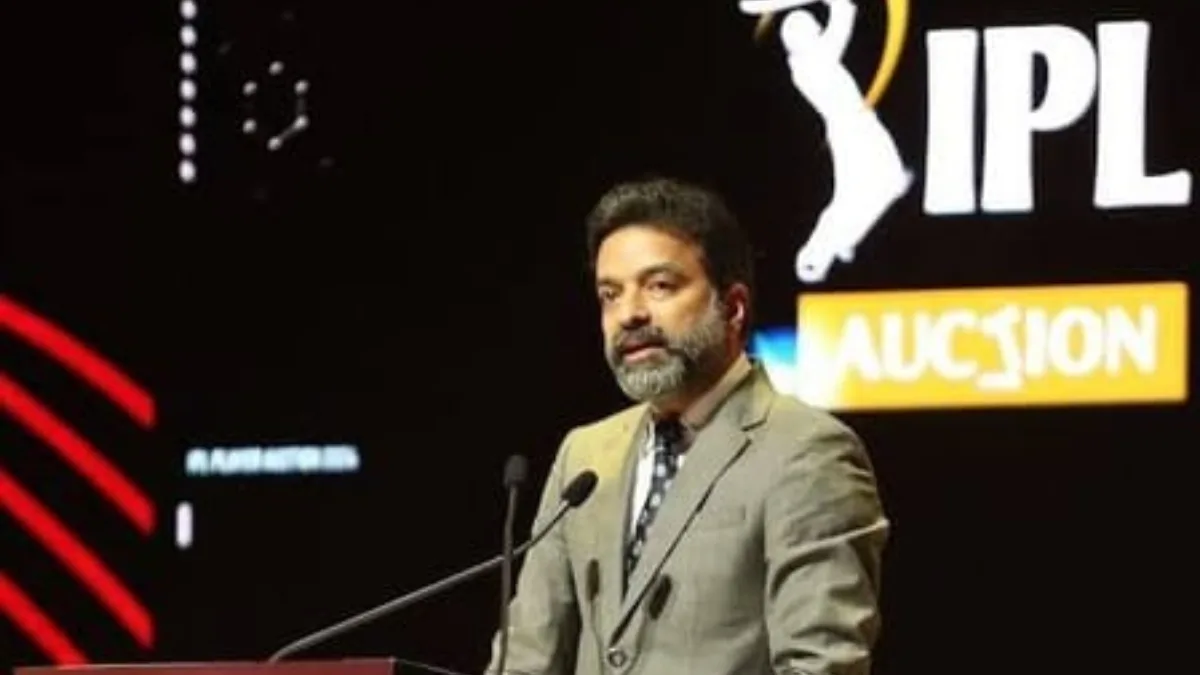
Amid rising concerns over a shortage of LPG cylinders due to international tensions, the issue has also reached the Indian Premier League (IPL). IPL chairman Arun Dhumal said the league is monitoring potential challenges around hospitality and travel logistics ahead of the 2026 season, though no formal concerns have yet been raised by hotels or other stakeholders.
The IPL 2026 season, which was initially scheduled to begin on March 26, will now start on March 28, with the schedule for the first 20 matches expected to be announced on March 12. The ten-team tournament will host top international players, coaches and broadcasters, making travel and hospitality logistics crucial to its smooth operation.
Advertisement
However, the ongoing US-Israel-Iran conflict has led to disruptions in LPG supply chains. The Ministry of Petroleum and Natural Gas recently said that cooking gas supply would be prioritised for households, raising concerns over a potential shortage of commercial LPG used by hotels and restaurants.
Several eateries in cities such as Mumbai, Bengaluru and Chennai have already indicated that they may be forced to halt operations due to the shortage of cooking gas.
Dhumal acknowledged that the situation could pose challenges but said the IPL has not yet received any official complaints.
“Definitely, it’s a challenge. But we haven’t received anything from hotels so far. If there is an issue and they inform us, then we will review it accordingly. If we had made bookings and there were concerns, they would have told us,” Dhumal told IANS on Tuesday.
“But they have to come back to us if this becomes a problem. Right now we are only hearing about it through the media, but we are reviewing the situation and will take a call if required,” he added.
Any broader disruption in the supply of commercial LPG could impact not only the IPL but also sectors such as hospitals, NGOs, educational institutions and other industries that rely heavily on bulk cooking gas.
The IPL season typically leads to a significant surge in food consumption, with restaurants and roadside vendors witnessing increased demand as fans gather to watch matches. Food delivery services also record a spike in orders as viewers prefer to watch games from home while ordering meals.
Apart from LPG concerns, travel logistics also remain under scrutiny following recent disruptions caused by geopolitical tensions. During the recently concluded Men’s T20 World Cup, teams such as Zimbabwe, West Indies and South Africa faced delays in returning home as flight routes were affected by the conflict.
With Dubai, a major transit hub, temporarily unavailable, Zimbabwe had to return home in three batches via Addis Ababa on Ethiopian Airlines. South Africa and the West Indies were also stranded in Kolkata before eventually departing on a charter flight via Johannesburg.
Although Australia and New Zealand’s airspaces remain unaffected, uncertainty remains over whether all overseas players, coaches and broadcasters, particularly from the West Indies, South Africa and England, will travel smoothly to India for IPL 2026, as many usually transit through Dubai.
Dhumal said the IPL is closely monitoring the situation regarding travel arrangements for foreign players.
“Right now, we are reviewing the situation. The IPL is still a few weeks away, so we will see how to proceed,” he said.